
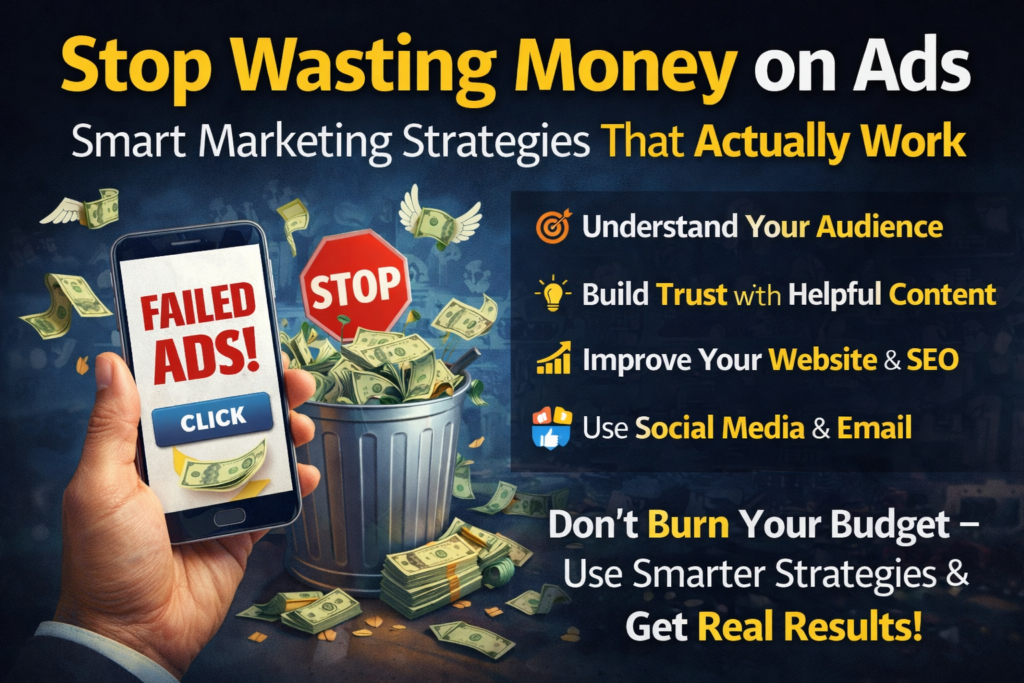
Many business owners believe that running ads is the fastest way to grow, but most of them end up wasting money because they do not have a clear strategy. They spend on ads, get a few clicks, and then feel frustrated when those clicks do not turn into real customers. The truth is simple: ads do not fix a weak marketing system. If your foundation is not strong, ads will only burn your budget faster. To grow your business in a smart way, you need to focus on strategies that actually work, bring consistent results, and build trust with your audience over time.
First, you need to understand your audience clearly. Many businesses skip this step and jump straight into advertising. This is a big mistake. You must know who your ideal customer is, what problems they face, and what they are searching for online. When you understand your audience, you can create messages that connect with them. This makes your marketing more powerful and reduces wasted effort. Instead of targeting everyone, you focus only on people who are more likely to buy from you.
Next, you need a strong and clear online presence. When someone clicks on your ad or finds you online, they visit your website or social media page. If your page looks confusing, slow, or outdated, they leave immediately. This means your money is wasted. You should create a clean website with simple design, fast loading speed, and clear information. Tell people what you do, how you can help them, and why they should choose you. Add real customer reviews to build trust. Make it easy for visitors to contact you. A strong online presence turns visitors into leads without spending extra money.
Content marketing is another strategy that works much better than random ads. Instead of only selling, you should focus on helping your audience. Create blog posts, videos, and social media content that solve real problems. Share tips, guides, and useful information. When people find your content helpful, they start trusting you. Over time, they see you as an expert. And when they need your service, they choose you first. This approach may take time, but it brings long-term results and reduces your need for paid ads.
Search engine optimization, or SEO, is also a powerful way to grow without wasting money. When your website appears on Google search results, you get free traffic from people who are already looking for your services. You can start by using the right keywords in your content, improving your website speed, and creating helpful blog posts. Local SEO is especially useful for small businesses. Create your Google Business Profile and keep it updated. Ask your customers to leave reviews. This helps your business appear in local searches and builds trust with new customers.
Social media is another smart way to market your business without spending too much. You do not need to be active on every platform. Choose one or two platforms where your audience spends time. Post regularly and stay consistent. Share your work, customer results, behind-the-scenes content, and simple tips. Show your personality and be real. People connect with people, not just brands. When you build a strong connection, your audience becomes loyal and supports your business.
One important thing to remember is that you should not try to sell all the time. Constant selling can push people away. Instead, focus on building relationships. Talk to your audience, reply to their comments, and answer their questions. When people feel valued, they trust you more. And trust leads to sales. This approach helps you grow without spending heavily on ads.
Email marketing is another strategy that many businesses ignore, but it works very well. When someone shows interest in your service, try to collect their email. You can offer something useful like a free guide or discount in return. Once you have their email, you can stay in touch with them. Send helpful content, updates, and offers. This keeps your business in their mind. Many people do not buy immediately, but they may buy later if you stay connected with them.
If you still want to run ads, you should do it in a smart way. Do not run ads without a plan. First, make sure your website and content are strong. Then create a simple and clear offer. Send people to a focused landing page instead of your homepage. Test different versions of your ad and see what works best. Start with a small budget and increase it only when you see results. This way, you reduce risk and avoid wasting money.
Another key strategy is tracking your results. Many businesses do not track their performance, so they do not know what is working. You should check your website traffic, ad performance, and lead conversions regularly. Use this data to improve your strategy. If something works, do more of it. If something does not work, fix it or stop it. This helps you make better decisions and use your budget wisely.
Consistency is the most important factor in marketing success. Many people try for a few weeks and then give up when they do not see instant results. But real growth takes time. You need to keep posting content, improving your website, and engaging with your audience. Small efforts done daily can create big results over time. Stay patient and keep learning.
Building a strong brand also plays a big role in reducing ad costs. When people recognize your brand and trust you, they are more likely to choose you without needing constant ads. You can build your brand by sharing your story, showing your values, and staying consistent in your message. A strong brand makes your marketing easier and more effective.
In the end, you do not need to spend a lot of money on ads to grow your business. You need a smart strategy, clear message, and consistent effort. Focus on understanding your audience, building trust, creating helpful content, and improving your online presence. Use ads only as a support tool, not your main strategy. When you follow this approach, you stop wasting money and start seeing real results. Your business grows in a stable and sustainable way, and you gain customers who trust you and stay with you for a long time.
